
最新刊期
卷 45 , 期 3 , 2026
-
 摘要:Sugar compounds are important organic tracers for atmospheric pollution sources. However,their characteristics and origins in PM2.5 in high-altitude cities remain poorly understood. Based on a one-year observation campaign in urban Lhasa(elevation:3 650 m),this study analyzed the composition,seasonal variation and sources of sugar compounds in PM2.5. The annual average concentration of total sugars was(260.6±379.6) ng·m-3,dominated by levoglucosan(180.3±307.8) ng·m-3,indicating biomass burning as the primary source. Total sugar concentrations exhibited a distinct“winter-high,summer-low”pattern,with anhydrosugars accounting for over 90% of total sugars in winter,highlighting the influence of heating activities. Monosaccharides were primarily attributed to pollen emissions,while sugar alcohols mainly originated from fungal spores; however,both showed significant positive correlations with anhydrosugars(p<0.05),suggesting that biomass burning also contributed to their presence. Furthermore,certain sugar alcohols(e.g.,arabitol and mannitol) were significantly correlated with monosaccharides(p<0.05),reflecting source complexity. Combined with diagnostic ratios—levoglucosan/mannosan(L/M:8.8±2.6),mannosan/galactosan(M/G:4.0±1.4),and levoglucosan/potassium(L/K⁺:0.49±0.54)—and local fuel usage patterns,biomass burning sources were identified as softwood,herbaceous materials,crop residues,and yak dung. These sources exhibited pronounced seasonal variations:softwood dominated in winter;contributions from crop residues and herbaceous materials increased in summer and autumn;mixed sources characterized spring; and yak dung combustion likely occurred year-round.关键词:Lhasa;PM2.5;sugar compounds;biomass burning;source722|149|0更新时间:2026-07-15
 -
 摘要:Fluoranthene(FLU) is a persistent organic pollutant ubiquitously present in environment. This work proposed an integrated strategy combining alternating multi-linear decomposition-based multi-way calibration with three-dimensional fluorescence for studying the fluorescence spectral characteristics and accurate quantitative analysis of FLU in different environmental samples. First,fluorescence data arrays of FLU in synthetic water samples under different pH conditions were analyzed using alternating trilinear decomposition(ATLD),augmented ATLD(AATLD) and alternating quadrilinear decomposition(AQLD),respectively. The results revealed that when pH changed from 3.0 to 9.0,the FLU excitation spectrum underwent distortion,with its maximum excitation wavelength exhibiting a blue shift,while the emission spectrum remained unchanged. The average recoveries(ARs) of FLU obtained by AATLD and AQLD were(99.8±6.6)% and(100±7.2)%,respectively,which were superior to the result of ATLD((103±7.7)%). Subsequently,ATLD was employed to explore the fluorescence spectral characteristics and contents of FLU in different matrices(tap water,lake water,river water and soil). It was found that matrix effects did not alter the FLU spectral shape resolved by ATLD,but severely impaired the quantitative ability of ATLD. Finally,multi-way fluorescence data arrays incorporating pH variations and matrix interferences were constructed and subsequently resolved using AQLD and extended AQLD(AAQLD). The achieved ARs for FLU were(107±12.4)% and(99.7±9.5)% for AQLD and AAQLD,respectively. These approaches effectively mitigated matrix effects,yielding satisfactory outcomes. Additionally,two sustainability assessment tools(AGREE and MA) evaluated the developed methodologies,both achieving scores exceeding 80.0%,confirming excellent analytical performance. This study comprehensively demonstrated the“higher-order advantage”inherent in multi-may calibration,which enabled rapid and accurate cross-matrix quantification of FLU by overcoming matrix heterogeneity. It thereby established a theoretical foundation for expedited detection of polycyclic aromatic hydrocarbons(PAHs) pollutants in diverse environmental matrices.关键词:alternating multilinear decomposition;three-dimensional fluorescence;fluoranthene;multi-way calibration;PAHs601|263|0更新时间:2026-07-15
 -
 摘要:The ultra-high performance liquid chromatography coupled with Orbitrap Fusion TMS(UHPLC-Orbitrap Fusion TMS) is a powerful tool for identification of trace pollutants in complex matrices because of its ultrahigh resolution and mass accuracy. In this study,a sensitive analytical method for the determination of five cyclotriphosphazenes(CTPs) in dust has been developed using UHPLC-Orbitrap Fusion TMS. Based on investigation of different solvent with varied pH,a mixture of acetonitrile,dichloromethane,and methyl tert-butyl ether(2∶2∶1,by volume,containing 1% ammonia) was selected as extraction solvent. Two key instrument parameters,automatic gain control(AGC) and maximum ion injection time(ITmax),were optimized as AGC target 5e5 and ITmax 300 ms,respectively. Determination and quantification of CTPs were performed in selected ion monitoring(SIM) mode,using an Xbridge BEH C8 column(4.6 mm× 250 mm,5 μm),with water(5 mmol/L ammonium acetate solution-0.3% ammonia) and methanol as mobile phase. Under the optimized condition,CTPs exhibited good linearity relationship within the range of 0.01-1 μg/L(with linear correlation coefficients>0.99) and sensitive detection of limits in the range of 0.011-0.14 ng/g. Acceptable recoveries were achieved at 72.7%-94.3% with relative standard deviations of 1.1%-5.4%,for low,medium,and high standards of spiked concentrations. The results indicated that CTPs could be extracted from dust and quantified sensitively without any clean-up procedure.关键词:cyclotriphosphazenes;ultra-high performance liquid chromatography;high-resolution mass spectrometry;lithium-ion batteries;flame retardants472|144|0更新时间:2026-07-15
 -
 摘要:Biofunctionalized porous lanthanide coordination polymer(Ln-BCPs) have recently gained increasing attention for heavy metal ion adsorption and detection,owing to their tunable pore structures,abundant functional groups,and distinct photochemical properties. In this study,a novel material,Tb-Asp-CP,was constructed for the highly selective adsorption and sensitive detection of Pb(Ⅱ) by incorporating L-aspartic acid(L-Asp) into a Tb-based framework through post-synthetic modification. The recognition and binding mechanisms of Tb-Asp-CP toward Pb(Ⅱ) were elucidated through a combination of experimental analysis and quantum chemical calculations. Density functional theory(DFT) calculations revealed that L-Asp coordinates with Pb(Ⅱ) predominantly through its carboxyl oxygen and amino nitrogen atoms,with electrostatic interactions contributing up to 95.03% of the binding energy. The adsorption behavior of Tb-Asp-CP towards Pb(Ⅱ) was well-described by the Langmuir isotherm and pseudo-second-order kinetic models,indicating a monolayer chemisorption process controlled by the interface reaction. The material exhibited a maximum adsorption capacity of 478 mg/g for Pb(Ⅱ) at pH 4.0 and 25 ℃,which is better than that of many previously reported Ln-BCPs. Furthermore,Tb-Asp-CP demonstrated excellent selectivity toward Pb(Ⅱ) in the presence of competing metal ions(Ni²⁺,Cr³⁺,Cu²⁺,Zn²⁺,etc.),with selectivity coefficients ranging from 3.03 to 32.54. Moreover,the material maintained 71.8% of its adsorption capacity after five adsorption-desorption cycles,indicating strong reusability. For detection applications,Tb-Asp-CP exhibited sensitive fluorescence responses toward Pb(Ⅱ),with a linear range of 0.01-5.0 mg/L(r²=0.996) and a low detection limit of 3.19 μg/L. Spike recovery experiments using vegetable samples yielded recoveries of 86.9%-108% with relative standard deviations(RSDs) of 2.9%-8.3%,confirming its practical applicability. Electrostatic potential(ESP) analysis revealed the presence of an “oxygen-rich cavity” formed by multiple carboxyl oxygen atoms from H₄btec and L-Asp,serving as the primary binding site for Pb(Ⅱ). Frontier molecular orbital(FMO) analysis showed that the Tb-Asp-CP-Pb(Ⅱ) complex possesses a narrow HOMO-LUMO energy gap(0.057 eV),which facilitates electron transfer and stabilizes the coordination structure. Upon the adsorption of Pb(Ⅱ) within these cavities,the energy transfer from the ligand to the central Tb³⁺ ion is likely impeded by a photoinduced electron transfer(PET) process,thereby enabling the highly sensitive detection of Pb(Ⅱ). Overall,this work provides a feasible post-synthetic modification strategy for constructing biofunctionalized Ln-BCPs. The excellent Pb(Ⅱ) adsorption and fluorescence detection performance of Tb-Asp-CP offers valuable insights and theoretical guidance for the development of high-efficiency materials for heavy metal remediation and food safety monitoring.关键词:porous coordination polymers;amino acid functionalization;lead ions;adsorption mechanism;detection670|421|0更新时间:2026-07-15
 -
 摘要:An integrated analytical method for the screening and quantification of 108 semi-volatile organic pollutants in aquatic environments was established using gas chromatography-tandem mass spectrometry(GC-MS/MS). This study investigated the impact of various types of diversion liners on the detection outcomes of target analytes,optimized the extraction solvents,and established optimal analytical conditions for measurement. Following dichloromethane liquid-liquid extraction of water samples,the optimized GC-MS/MS method demonstrated excellent linearity(r²>0.99) for all 108 target compounds within their respective concentration ranges. The method exhibited detection limits(LODs) of 0.001-1 μg/L,quantification limits(LOQs) of 0.002-2 μg/L,spiked recoveries of 77.8%-118%,relative standard deviations(RSDs) of 1.7%-12%,and matrix effects ranging from 79.7% to 129%. Application to eight electroplating wastewater samples(primarily containing copper,nickel,and zinc plating effluents) detected 25 semi-volatile organic pollutants at concentrations ranging from 1.78 μg/L to 30.53 mg/L. This method offers comprehensive compound coverage,rapid analysis,low detection limits,high precision,and excellent accuracy,making it particularly suitable for rapid screening and quantitative analysis of pollutants in environmental damage assessment cases.关键词:GC-MS/MS;semi-volatile organic compounds;environmental damage litigation cases;liquid-liquid extraction622|370|0更新时间:2026-07-15
 -
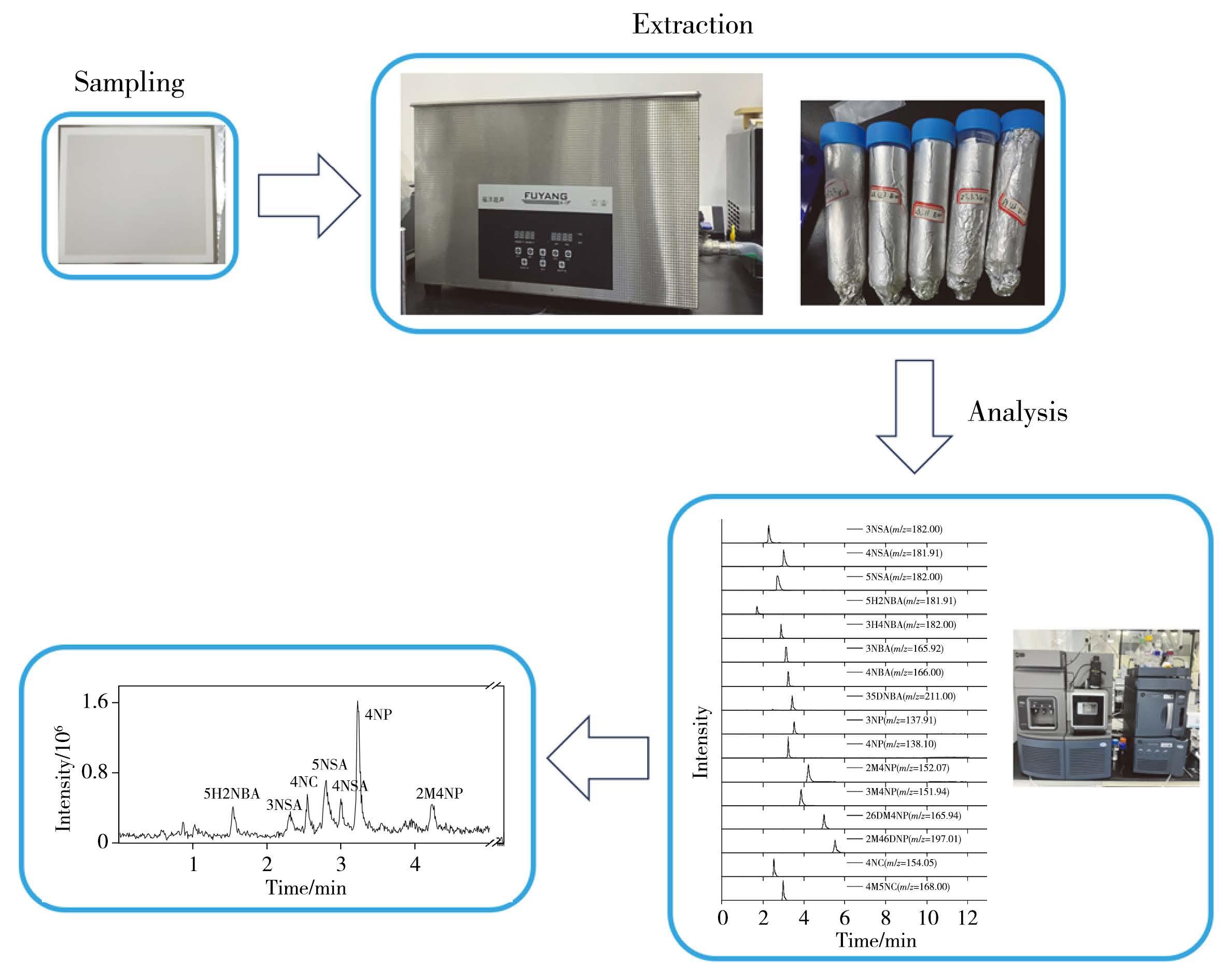 摘要:An analytical method for the determination of 16 nitrophenols(including typical species such as 4-nitrophenol,4-nitrocatechol,and 3-nitrosalicylic acid) in PM2.5 sample was established by ultra-high performance liquid chromatography-tandem mass spectrometry(UPLC-MS/MS). Methodological validation showed that the 16 nitrophenols exhibited good linearity in the range of 0.4-60 μg/L(r²>0.99). Based on a sampling volume of 54 m3 for actual samples,the method detection limits(LODs) ranged from 0.018 5 to 0.074 6 ng/m³,and the lower limits of quantification(LOQs) were from 0.073 9 to 0.298 2 ng/m³. At three spiking levels(low,medium,and high),the average recoveries were 87.4%-118%,and the relative standard deviations(RSDs,n=6) were not more than 15%. When this method was applied to the analysis of fine particles from DaWanShan Island(DWS) in Zhuhai,the total concentration of the 16 nitrophenols ranged from 0.60 to 88.57 ng/m3,among which 5-nitrosalicylic acid(accounting for 27.32%),4-nitrophenol(accounting for 25.86%),and 4-nitrocatechol(accounting for 17.69%) were the main components. This method is suitable for the detection of trace nitrophenols in the complex matrix of atmospheric fine particles and can provide technical support for the source tracing of atmospheric brown carbon pollution and health risk assessment.关键词:ultra-high performance liquid chromatography-tandem mass spectrometry(UPLC-MS/MS);fine particles;nitrophenol compounds;air pollution533|403|0更新时间:2026-07-15
 -
 摘要:A rapid detection method using high performance liquid chromatography-tandem mass spectrometry(HPLC-MS/MS) was established for determining dichloroacetic acid(DCA) and trichloroacetic acid(TCA) in urine of occupationally exposed individuals to 1,1,2,2-tetrachloroethane. The urine samples were acidified by adding hydrochloric acid solution,followed with sodium chloride being added and shaking. Subsequently DCA and TCA were extracted with ethyl acetate. The upper extract was concentrated to near dryness using nitrogen blowing,and then redissolved with 15% acetonitrile solution. After being filtered through a microporous membrane,they were injected into the instrument. Chromatographic separation was achieved using a Waters HSS T3(2.1 mm×100 mm,1.8 μm) column,with acetonitrile-0.1% acetic acid aqueous solution as the mobile phase for gradient elution. Electrospray ionization(ESI) source and multiple reaction monitoring(MRM) mode were employed. Quantification was performed using the matrix-matched curve external standard method. Both DCA and TCA exhibited linear relationships within the mass concentration range of 2.0-100 µg/L,with linear correlation coefficients(r) higher than 0.999. The limits of detection(LODs) and the limits of quantitation(LOQs) were calculated to be 0.2 µg/L and 1.0 µg/L,respectively. The recoveries at low,medium and high spiked concentration levels ranged from 75.3% to 104%. The average recoveries of DCA and TCA were 91.1% and 86.1%,respectively,with relative standard deviations(RSDs) ranging from 2.1% to 9.5%. The established analytical procedure was employed for urine DCA and TCA level investigating of the general population,routine occupational population,and occupational poisoning patients. The method is simple,rapid and highly sensitive,providing a technical reference for biological monitoring and clinical testing of occupational poisoning in occupationally exposed individuals to 1,1,2,2-tetrachloroethane.关键词:1,1,2,2-tetrachloroethane;high performance liquid chromatography-tandem mass spectrometry;dichloroacetic acid;trichloroacetic acid;occupational poisoning587|442|0更新时间:2026-07-15
 -
 摘要:To compensate the absence of some polychlorinated biphenyls(PCBs) items in water quality monitoring,a new environmentally friendly,efficient and sensitive analytical method for 9 PCBs in groundwater was established by using vacuum-assisted headspace solid-phase microextraction technology(Vac-HS-SPME) for enrichment and gas chromatography-mass spectrometry(GC-MS) for detection. Experimental conditions including extraction fiber type,extraction temperature,extraction time,and stirring speed were optimized as 65 μm PDMS/DVB extraction fiber at 70 ℃ with a stirring speed of 500 r/min for a duration of 40 min. 9 target PCBs exhibited excellent linearities within the range of 0.02-2.0 μg/L with correlation coefficients(r) between 0.998 1-0.999 4. Method detection limits varied from 0.002 to 0.016 μg/L. The spiked recoveries of the 9 PCBs ranged from 78.9% to 115%,with relative standard deviations(n=6) between 2.8%-12%. In comparison to traditional headspace solid-phase microextraction(HS-SPME) techniques,Vac-HS-SPME offers enhanced sensitivity and extraction efficiency-particularly for PCBs with higher chlorination levels. This method is simple to operate,environmentally friendly and highly sensitive and has been successfully applied to the determination of actual groundwater samples,providing a new technical means for the qualitative and quantitative analysis of PCBs in environmental water samples.关键词:vacuum-assisted headspace solid-phase microextraction;gas chromatography-mass spectrometry;groundwater;polychlorinated biphenyls572|304|0更新时间:2026-07-15
 -
 摘要:The emission of gold ions(Au3+) poses severe threats to human health,the environment,and plant growth. Therefore,rapid and precise detection of Au3+ is of great significance. In this work,a 1,8-naphthalimide-based Au3+ fluorescent probe A1 was synthesized using(Z)-3-methylpent-2-en-4-yn-1-ol as the recognition group. In the presence of Au3+,the(Z)-3-methylpent-2-en-4-yn-1-ol of probe A1 was catalytically converted into a furan structure,leading to the quenching of its cyan fluorescence. The sensing mechanism was confirmed through high-resolution mass spectrometry(HR-MS) and theoretical calculations. Probe A1 exhibits advantages such as good selectivity,high sensitivity(5.27 μmol/L),and a wide pH range of applicability(3.0-10.5) for Au3+ response. Rapid quantitative detection of Au3+ in real water samples can be achieved through smartphone-assisted probe A1-based solution colorimetric analysis.关键词:fluorescent probe;1,8-naphthalimide;Au3+;smartphone;environmental water samples546|448|0更新时间:2026-07-15
 -
Detection of Alkanes Volatile Organic Compounds by NO2+ Chemical Ionization Mass Spectrometry 增强出版 AI导读
 摘要:Volatile organic compounds(VOCs) are significant components of atmospheric pollution. Among them,alkane compounds,due to their relatively stable chemical properties,pose challenges such as low sensitivity and poor selectivity in conventional detection methods. In this study,NO2+ chemical ionization mass spectrometry(CI(NO2+)-MS) was employed for the detection and analysis of alkane VOCs. Experimental results demonstrate that the CI(NO2+)-MS method exhibits excellent detection performance for C5-C11 alkanes. Within the concentration range of 10-500 nL/L,a strong linear relationship was observed between the concentration and the characteristic peak height of each alkane VOC in the mass spectrum,with correlation coefficients all greater than 0.99. The detection limits ranged from 3.41 to 9.91 nL/L. The spiked recovery rates for samples were between 90.1% and 105%,and the relative standard deviation of the measurement results was 2.1%-4.4%(n=5). This method provides a new technique for real-time monitoring of alkane VOCs in the atmosphere. It is important for controlling pollution from petrochemical plants and for advancing atmospheric chemistry research.关键词:volatile organic compounds;alkanes;chemical ionization;mass spectrometry;petrochemical industry;environmental monitoring497|294|0更新时间:2026-07-15
 -
 摘要:This study synthesized a molecularly imprinted polymer(MIP) selective for metalaxyl using oxadixyl as a dummy template,methacrylic acid and acrylamide as binary functional monomers,ethylene glycol dimethacrylate as a cross-linker,and azodiisobutyronitrile as an initiator via precipitation polymerization. The polymer was characterized by scanning electron microscopy and Fourier transform infrared spectroscopy,and its adsorption behavior was evaluated through isothermal and kinetic experiments. Results confirmed high affinity and specificity toward metalaxyl and its metabolite,metalaxyl acid. The MIP was employed as a solid-phase extraction sorbent coupled with liquid chromatography-tandem mass spectrometry(LC-MS/MS) for the analysis of aquaculture water and sediment samples. The method demonstrated good linearity(r²>0.997) from 1 to 200 ng/mL,with average recoveries of 86.1%-105% and relative standard deviations not more than 8.2%. Detection limits were 1.25,2.34 ng/L in water and 0.15,0.29 ng/g in sediment,and quantification limits were 4.16,4.81 ng/L in water and 0.38,0.60 ng/g in sediment,respectively. This method is sensitive,robust,and straightforward,which is suitable for routine monitoring of trace metalaxyl residues in aquaculture environments,supporting sustainable aquaculture practices.关键词:metalaxyl;metalaxyl acid;molecularly imprinted solid-phase extraction;LC-MS/MS;aquaculture environments464|286|0更新时间:2026-07-15
Special Column on Environmental Monitoring and Health

-
 摘要:Humanized monoclonal antibodies,generated by grafting complementarity-determining regions(CDRs),offer significant advantages in terms of safety and efficacy as therapeutic agents. The accurate determination of heavy- and light-chain CDR sequences is crucial for the development and production of recombinant antibodies. In this study,we performed de novo sequencing on three humanized pan-coronavirus neutralizing antibodies(3D11,C1520,5A6) utilizing an integrated SP-MEGD pretreatment method combined with a bottom-up mass spectrometry approach. The antibody sequences were reconstructed employing three assembly algorithms:PEAKS AB,Stitch,and Fusion. A systematic comparison was conducted to evaluate the performance of these three algorithms,focusing on their assembly coverage and accuracy. The results indicated that the Fusion algorithm achieves 100% coverage and accuracy under the current experimental conditions,for both light and heavy chains across all three antibodies. Furthermore,it maintains stability in high-variability regions of CDRs without introducing any additional sequence insertions. In contrast,PEAKS AB and Stitch exhibited fragment missing,insertions,or misassembled segments in certain areas. In conclusion,the robust performance demonstrated by the Fusion algorithm provides a reliable foundation for sequence analysis that supports rational design and development efforts concerning pan-coronavirus neutralizing antibodies.关键词:bottom-up mass spectrometry;de novo sequencing;sequence assembly algorithms;pan-coronavirus;neutralizing antibodies169|267|0更新时间:2026-07-15
 -
 摘要:Near-infrared(NIR) spectroscopy,owing to its advantages of rapid detection,non-destructiveness,and reagent-free analysis,holds great potential for mineral composition analysis. However,in multi-device industrial scenarios,discrepancies in light source intensity,detector sensitivity,optical configuration,and sampling distance among different spectrometers lead to significant distribution shifts in spectral data of the same sample across devices. Consequently, the predictive performance of quantitative models trained on one device deteriorates markedly when deployed on another. Traditional chemometric calibration transfer methods(e.g.,direct standardization,piecewise direct standardization,and slope/bias correction) rely on linear mapping assumptions,making them inadequate for complex nonlinear domain shifts. Moreover,they require repeated measurements of standard samples,thereby increasing application costs. To address these issues,this paper proposes a cross-device modeling approach that integrates multi-scale attention mechanisms with domain-adversarial learning. In the feature extraction stage,a one-dimensional encoder-decoder network is constructed by combining convolutional block attention modules with multi-scale feature fusion,enabling simultaneous capture of global trends and local spectral details while suppressing noise. In terms of transfer strategy,domain-adversarial learning is introduced,where adversarial training with a gradient reversal layer and a domain classifier achieves end-to-end alignment of feature distributions between source and target devices. Additionally,standard normal variate transformation and Savitzky-Golay convolution smoothing are applied to enhance spectral consistency and signal-to-noise ratio at the input level. On a dataset of 1 330 bauxite spectra collected using two portable NIR spectrometers,eight-fold cross-validation experiments demonstrate that the proposed method achieves a coefficient of determination(R²) of 0.860 3 and a root mean square error(RMSE) of 1.752 1 on the target device,significantly outperforming traditional calibration transfer methods and several deep learning baselines. Feature distribution visualization and ablation studies further validate the effectiveness of multi-scale feature fusion,attention mechanisms,and domain-adversarial strategies in feature alignment and performance improvement.关键词:near-infrared spectroscopy;transfer learning;bauxite;multi-scale fusion159|492|0更新时间:2026-07-15
 -
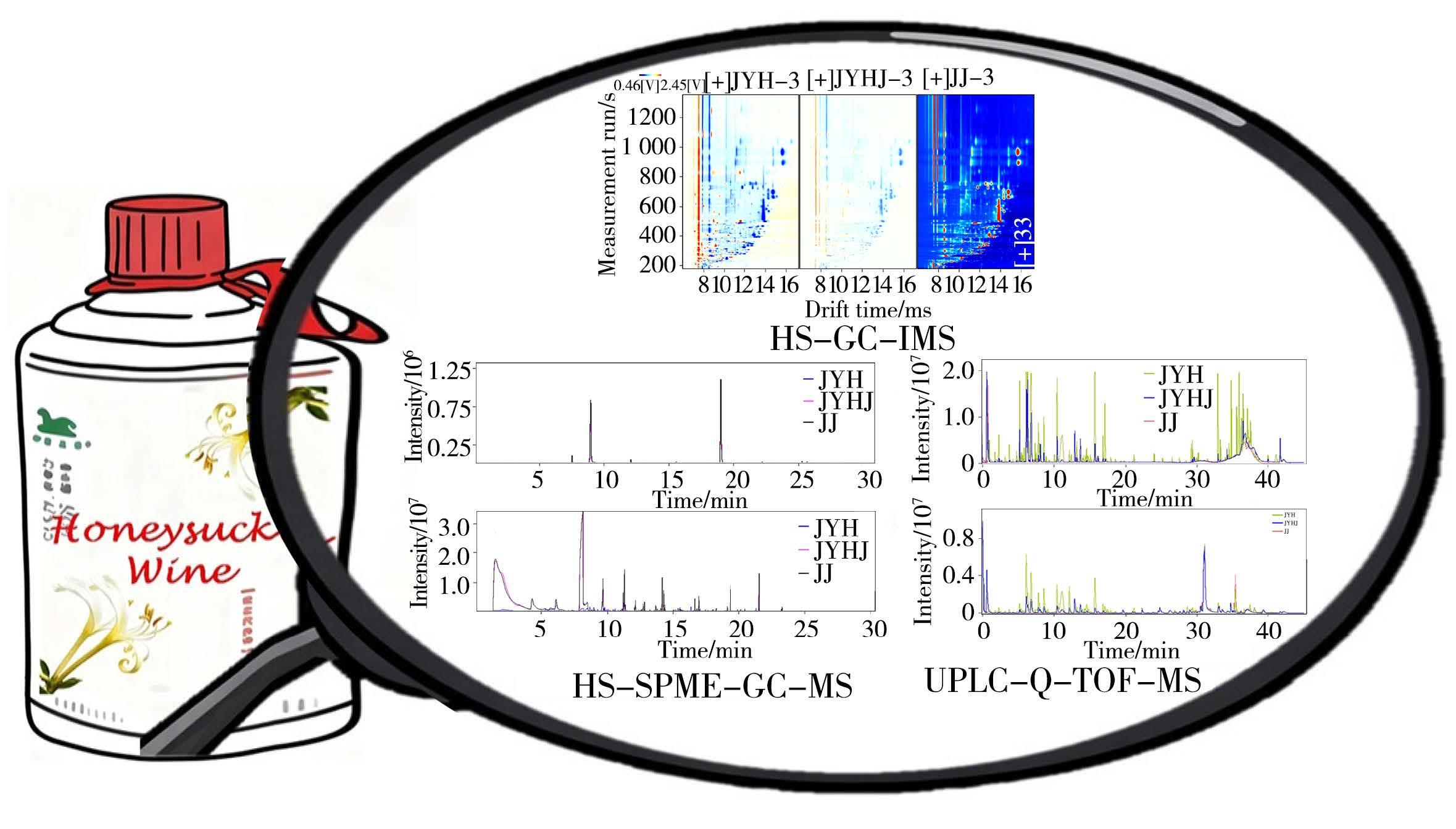 摘要:This study employed a multi-technique combination,including electronic nose,electronic tongue,ion mobility spectrometry,and mass spectrometry,to analyze the differences in flavor characteristics and chemical compositions between honeysuckle wine and its base wine. Results show that the electronic nose can distinguish the odor differences among wine samples,while the electronic tongue can identify the taste differences. The sweetness response value of honeysuckle wine is higher than that of the base wine,and neither of the two types of wine has a bitter or astringent taste. A total of 78 and 181 volatile compounds are detected by headspace gas chromatography-ion mobility spectrometry(HS-GC-IMS) and headspace solid-phase microextraction-gas chromatography-mass spectrometry(HS-SPME-GC-MS),respectively. Additionally,138 non-volatile compounds are identified using ultra-high performance liquid chromatography-quadrupole-time-of-flight tandem mass spectrometry(HPLC-Q-TOF-MS). After the soaking with honeysuckle,a total of 105 chemical components are transferred to honeysuckle wine. Among them,the transfer of compounds such as dihydroactinidiolide,serine,and proline enhanced the sweetness characteristic of honeysuckle wine,making its sweet sensory property superior to that of the base wine. Overall,this study provides insights into the mechanism of flavor formation in honeysuckle wine and offers a theoretical basis for the production practice of honeysuckle wine.关键词:honeysuckle wine;base wine;HS-GC-IMS;HS-SPME-GC-MS;UPLC-Q-TOF-MS88|508|0更新时间:2026-07-15
 -
Research on Origin Traceability of
Paeoniae Radix Rubra Pieces Based on UHPLC-Q-Orbitrap HRMS 增强出版 AI导读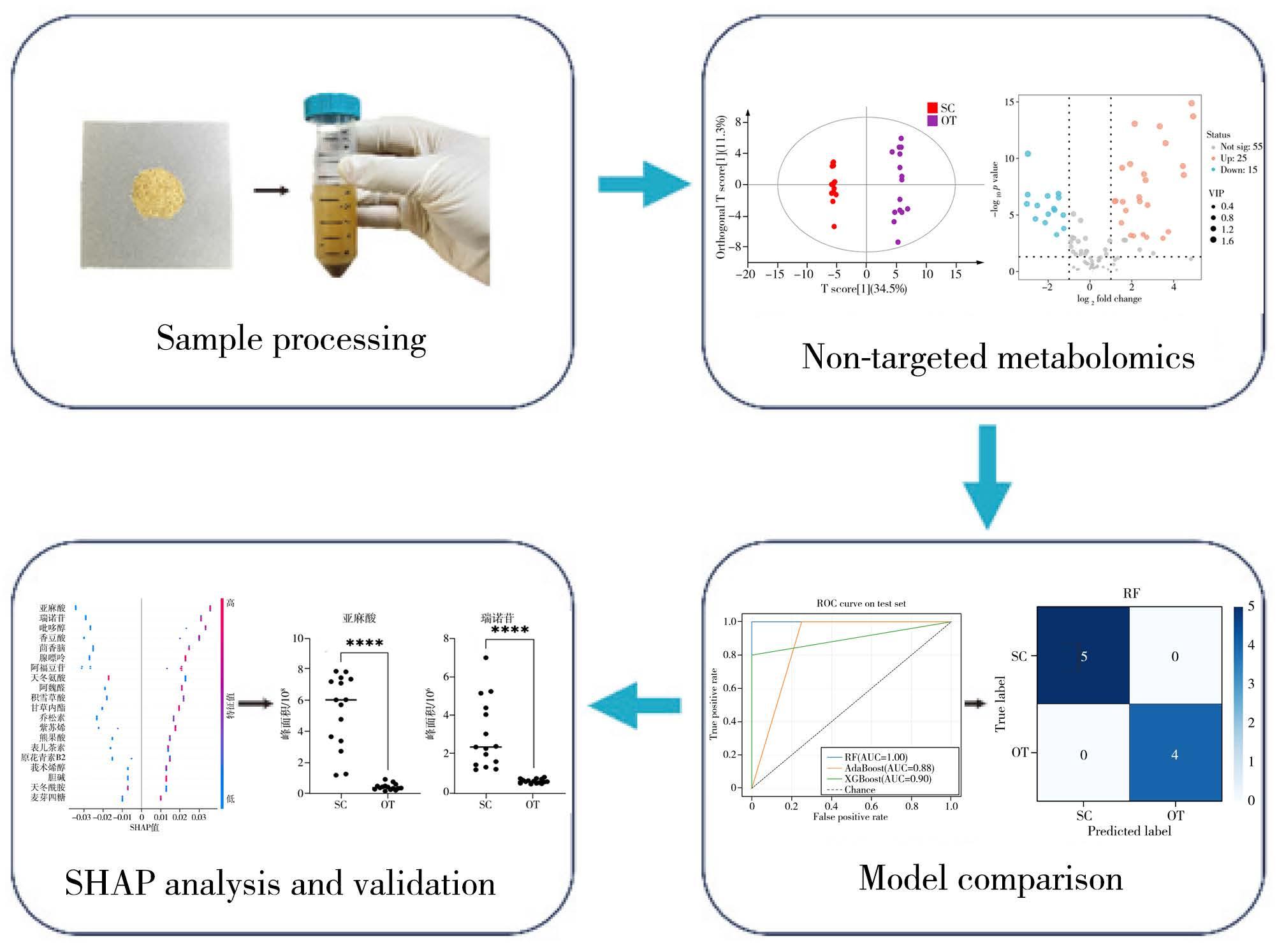 摘要:This study was based on ultra-high performance liquid chromatography quadrupole electrostatic field orbital trap high-resolution mass spectrometry(UHPLC-Q-Orbitrap HRMS) technology,combined with multiple machine learning methods,to construct a production identification strategy for Sichuan Paeoniae Radix Rubra and other Paeoniae Radix Rubra slices from northern regions. The chemical composition information of the sample was obtained through UHPLC-Q-Orbitrap HRMS,and differential compounds were screened using multivariate statistical analysis. Based on this,random forest(RF),extreme gradient boosting(XGBoost),and adaptive boosting(AdaBoost) classification models were established. The performance of the model was evaluated based on the area under the working characteristic curve(AUC) of the subjects,and the Shapley Additive Explanations(SHAP) method was introduced to quantitatively rank and interpret the contribution of endogenous components in the discrimination process. The results showed that a total of 95 chemical components were detected,of which 40 showed significant differences between different production areas. Comparison of model performance showed that the RF model outperforms XGBoost and AdaBoost in both accuracy and stability. SHAP analysis further revealed that linolenic acid,renoside,and pyridoxine contribute the most significantly in origin discrimination,and their content were significantly higher in Sichuan Paeoniae Radix Rubra,with the potential to serve as characteristic components of origin. The methodological framework established in this study can effectively achieve precise identification of Sichuan Paeoniae Radix Rubra decoction pieces,providing new ideas and technical support for the authentic evaluation and quality control of traditional Chinese medicine.关键词:Paeoniae Radix Rubra;chemometrics;chemical component;machine learning;geographical origin;UHPLC-Q-Orbitrap HRMS169|141|0更新时间:2026-07-15
 -
 摘要:Lithocarpus litseifolius(Hance) Chun.,hailed as the 'Chinese Caterpillar Fungus' among teas,is rich in dihydrochalcone glycosides such as phloridzin and 3-hydroxy phloridzin,but their content exhibits significant regional variations. This study proposes a method for geographical origin discrimination and active compound content prediction of Lithocarpus litseifolius(Hance) Chun. based on hyperspectral imaging and chemometrics. Hyperspectral images of samples from four production regions—Jiangxi,Guizhou,Hunan,and Yunnan,were collected to obtain raw spectral data. Second derivative(SD),multiplicative scatter correction(MSC),and standard normal variate(SNV) were applied for noise reduction. For origin discrimination,partial least squares-discriminant analysis(PLS-DA),support vector machine(SVM),and k-nearest neighbor classification(KNN-Class) models were established. For phloridzin and 3-hydroxy phloridzin content prediction,partial least squares regression(PLSR) and KNN regression(KNN-Reg) models were developed. Additionally,the successive projections algorithm(SPA) and competitive adaptive reweighted sampling(CARS) were employed for feature wavelength selection. The results demonstrated that the optimal model for origin discrimination was SD-CARS-SVM,achieving a prediction accuracy of 100%. The best models for phloridzin and 3-hydroxy phloridzin content prediction were SD-CARS-PLSR and MSC-CARS-PLSR,respectively,with prediction set determination coefficients(Rp²) of 0.93 and 0.83,and residual prediction deviations(RPD) of 3.87 and 2.45. This study provides a rapid quality assessment solution for Lithocarpus litseifolius(Hance) Chun. and lays the foundation for developing specialized miniaturized detection instruments.关键词:Lithocarpus litseifolius(Hance) Chun.;hyperspectral imaging technology;phloridzin;3-hydroxy phloridzin;geographical origin;quality;feature selection286|498|0更新时间:2026-07-15
 -
 摘要:A method of high performance liquid chromatography-tandem mass spectrometry combined with solid phase extraction for the simultaneous determination of 9 alkylphenols(AP) and alkylphenol ethoxylates(APEO) in down was developed by optimizing pretreatment and instrument parameters. The residues were extracted by ultrasonic with methanol and purified by HLB solid phase extraction column,separated by gradient elution on C18 chromatographic column(2.1 mm×100 mm,2.6 μm) with water-methanol(determination of AP),0.005 mol/L ammonium acetate aqueous solution-methanol(determination of APEO) as the mobile phases,and by multiple reaction monitoring mode,and the external standard method was used for quantitative analysis. The results showed that it had a good linear relationship in the range of 0.01-3 mg/L(r2>0.995).The detection limits were 0.06-3.16 μg/kg,and the quantification limits were 0.21-10.53 μg/kg. The recoveries of the 9 kinds of targets were in the range of 83.0%-91.2%,and the relative standard deviations(RSDs) were 2.1%-8.0%. Five kinds of AP and APEO were detected in the actual down samples. The method is simple to operate with high recovery and precision,and can be used for the determination of alkylphenols and alkylphenol ethoxylates in down.关键词:down;solid phase extraction;high performance liquid chromatography-tandem mass spectrometry;alkylphenols;alkylphenol ethoxylates111|204|0更新时间:2026-07-15
 -
Mass Spectrometry Cleavage Characteristics and Patterns of Nitrogen Mustard-Albumin Peptide Adducts 增强出版 AI导读
 摘要:The peptide adducts of nitrogen mustard-albumin were characterized in vitro using ultra high performance liquid chromatography coupled with high resolution mass spectrometry(UPLC- HRMS) in full scan-data dependent secondary acquisition(Full MS/dd-MS2) mode to expand the library of biomarkers that can be used for traceably identify nitrogen mustard exposure. The results showed that all three nitrogen mustards were able to form adducts with six albumin peptides at sites including cysteine(Cys34),which contains the only free sulfhydryl group,as well as leucine(Leu327),methionine(Met329) and glutamic acid(Glu230). The seven adduct peptides formed can be used as potential nitrogen mustard biomarkers,and dipeptide and tripeptide have already been demonstrated to be useful for confirmatory indication of nitrogen mustard exposure. The characteristic ions and cleavage patterns of the adducts generated from the incubation of three nitrogen mustards with six peptides in vitro were analyzed and summarized,and the ion pairs detected by mass spectrometry were given and optimized,laying the foundation for the subsequent establishment of a quantitative method based on liquid chromatography-tandem mass spectrometry in a multiple reaction monitoring mode,and providing technical support for the confirmation of the exposure of nitrogen mustards in complex samples.关键词:nitrogen mustard;albumin;adducts;fragmentation patterns;UPLC-HRMS85|337|0更新时间:2026-07-15
 -
 摘要:In this work,functionalized green-emitting carbon dots(G-CDs) were synthesized via a solvothermal method using resorcinol as the precursor and anhydrous ethanol as the solvent. A fluorescent probe was subsequently constructed for the rapid detection of thiabendazole(TBZ) residues in food. The morphology,functional groups,and optical properties of both the G-CDs and their complexes with TBZ were systematically characterized. The recognition mechanism was attributed to specific interactions between TBZ and the G-CDs,dominated by static quenching and accompanied by synergistic effects such as π-π stacking and energy transfer. Under optimal detection conditions(G-CDs diluted 500-fold,pH 6.0),TBZ effectively quenched the fluorescence intensity of the G-CDs at 487 nm in optimal conditions. A good linear relationship was observed between the fluorescence intensity ratios and the TBZ concentrations in the range of 0-1.00 mg/kg,with a correlation coefficient(r2) of 0.991 3 and a low limit of detection of 0.021 4 mg/kg. For spiked sample analysis,the recoveries ranged from 91.1% to 109%,with RSDs between 1.2% and 5.2%. This method offers simple operation,rapid response,low cost,high sensitivity,and good reliability,providing a practical technical solution for the highly sensitive detection of TBZ residues in complex food matrices and offering new insights for the design and development of fluorescent probes.关键词:carbon dots;fluorescent probe;rapid detection;pesticide residue;thiabendazole;fruits92|259|0更新时间:2026-07-15
 -
 摘要:A novel sampling bag method combined with thermal desorption gas chromatography-mass spectrometry(TD-GC-MS) was developed to simultaneously determine the emission levels of 11 high-risk volatile organic compounds(VOCs) from juvenile products,including 4 newly discovered pollutants based on non-targeted screening. The sample was placed in a sampling bag at a surface area loading ratio of 1 m2/m3,which was filled with nitrogen and maintained at a constant temperature of 40 ℃ for 2 hours to release VOCs. The gas in the bag was collected by using Tenax sorbent tubes and quantified by TD-GC-MS with external standard method. The 11 target VOCs exhibited good linearity in the range of 20-500 ng(r2≥ 0.995 0),with method detection limits of 0.015-7.2 ng. The relative standard deviations(RSDs) under repeatability conditions for standard solutions was 0.10%-7.8%,while RSDs for actual samples were 3.9%-18%. This method is characterized with simple equipment,easy operation,and high sensitivity,making it suitable for rapid quantitative analysis of multiple VOCs in juvenile products. It can provide technical support for product safety assessment and development of new regulated limits of VOCs levels.关键词:sampling bag method;volatile organic compounds(VOCs);thermal desorption-gas chromatography-mass spectrometry(TD-GC-MS);juvenile products;emission content88|411|0更新时间:2026-07-15
 -
 摘要:α-Fe2O3/reduced graphene oxide(α-Fe2O3/rGO) composites were synthesized by a hydrothermal method and employed to construct a cataluminescence(CTL) sensor for the detection of carbon monoxide(CO). The sensor consists of a ceramic heating tube coated with the sensing material,a quartz reaction chamber,a gas flow and injection system,and a photomultiplier tube coupled with a signal processing unit,enabling real-time acquisition of the emission generated during the catalytic oxidation of CO. The crystalline structure and morphology of the synthesized material were characterized by X-ray diffraction,nitrogen adsorption-desorption,and transmission electron microscopy,and the detection conditions were systematically optimized. The results demonstrated that the α-Fe2O3/rGO composites exhibited a significantly higher CTL response than pure α-Fe2O3. The sensor showed a linear detection range for CO from 80 to 1 125 mg/m3,with a detection limit of 26 mg/m3(S/N=3). No obvious responses were observed toward common interfering gases. In simulated mixed gas samples,the recovery of CO was within 104%-110%. Mechanistic studies suggested that CO was oxidized by O- species on the α-Fe2O3/rGO surface to generate excited CO2,which emitted photons during relaxation to the ground state. The CTL sensor constructed in this study based on the α-Fe2O3/rGO composite material enables rapid and highly selective detection of CO,offering a novel technical basis for CO online monitoring and emergency warning applications,and providing a new approach for the design of CTL gas-sensing materials.关键词:carbon monoxide;cataluminescence;gas sensor;α-Fe2O3;reduced graphene oxide90|190|0更新时间:2026-07-15
 -
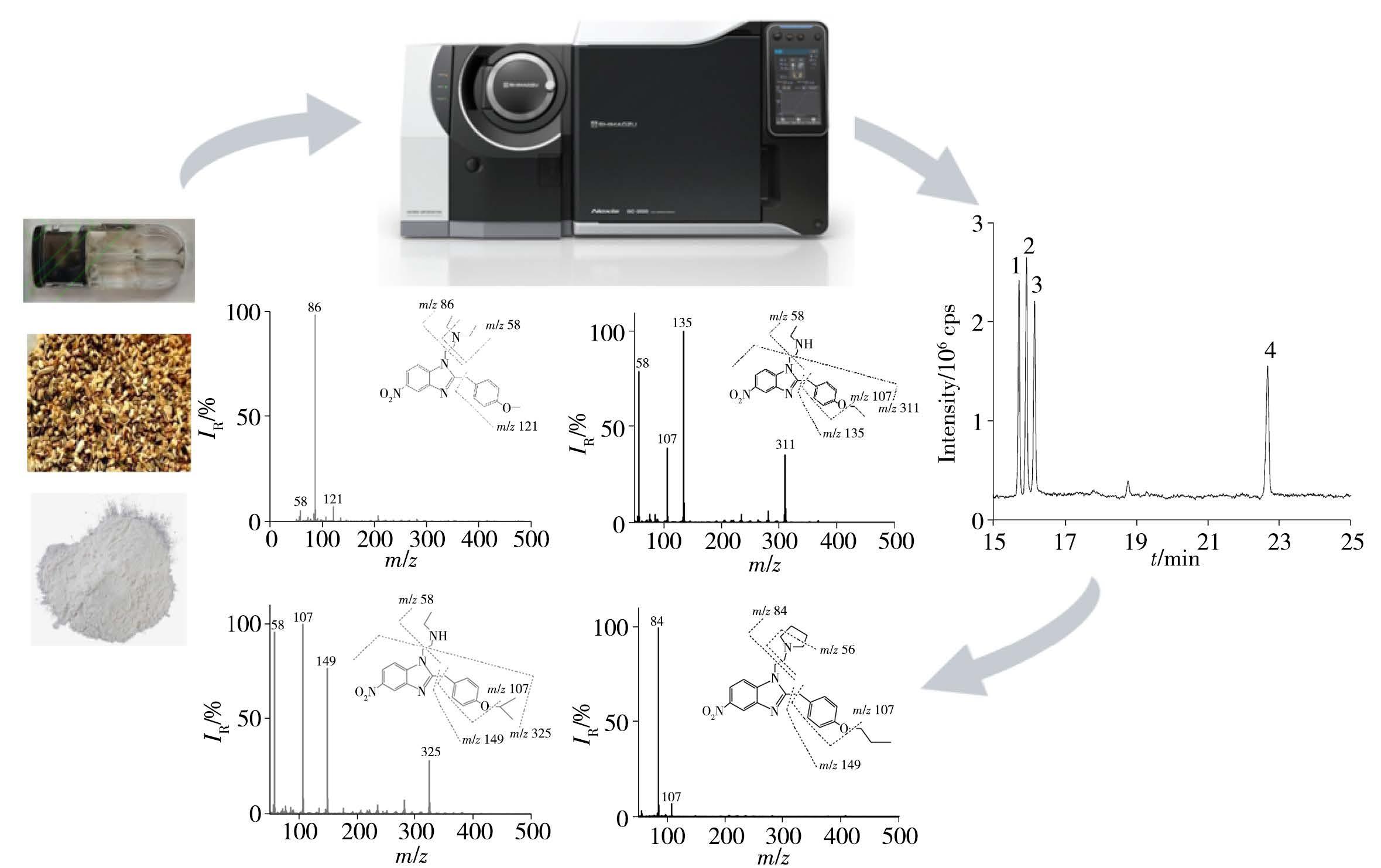 摘要:A method of gas chromatography-mass spectrometry(GC-MS) was developed for detection of metonitazene,protonitazepyne,N-desethyl etonitazene and N-desethyl isotonitazene in e-cigarette oil,powder and tobacco. E-cigarette samples and powder samples were dissolved in methanol. Tobacco samples were extracted using methanol. The supernatant was tested by external standard quantitative method. Results showed that four nitazenes had a good linear relationship in the range of 5.00 µg/mL to 200.00 µg/mL,the detection limits were 0.27-0.71 µg/mL,and the quantitation limits were 0.90-2.34 µg/mL. At three spiked levels of 0.40,4.00 and 40.00 mg/mL,the recoveries of four nitazenes in e-cigarette oil were between 89.6% and 106%,with relative standard deviations(RSDs) ranging from 2.9% to 4.1%. At three spiked levels of 5.00,50.00 and 500.00 mg/g,the recoveries of four nitazenes in powder were between 93.4% and 104%,with RSDs ranging from 1.3% to 3.3%. At three spiked levels of 0.10,1.00 and 10.00 mg/g,the recoveries of four nitazenes in tobacco were between 90.0% and 106%,with RSDs ranging from 2.0% to 3.3%. The method is quick,selective,sensitive and accurate,which is suitable for the identification of nitazenes in judicial identification.关键词:gas chromatography-mass spectrometry;metonitazene;protonitazepyne;N-desethyl etonitazene;N-desethyl isotonitazene;e-cigarette oil;powder;tobacco152|468|0更新时间:2026-07-15
Scientific Papers
-
 摘要:This study developed a portable electrochemical impedance spectroscopy(GEIS) tester featuring high power,high precision,and a broad frequency testing range,making it suitable for GEIS testing of lithium batteries under diverse operating states. The instrument can accurately output excitation signals ranging from 0 to 5 A,with a 12-bit digital-to-analog converter(DAC) chipused to adjust the excitation amplitude. It is capable of detecting impedance signals within the frequency range of 100 kHz to 10 mHz. Tests were conducted on 456080-type lithium batteries,and comparisons with results from the Gamry Reference 600+ revealed that the relative and absolute errors of the measured impedance magnitude using this instrument do not exceed 0.56% to 1.8%. To validate the proposed battery state of health(SOH) prediction algorithm,the instrument was used for practical testing on sample batteries,resulting in a total of 486 sets of data from lithium batteries under different states. By feeding the impedance spectrum data as input into the XGBoost algorithm,accurate estimation of the lithium battery SOH was achieved,characterized by small average errors and good stability. The GEIS testing system developed in this study can provide more real-time data based on electrochemical impedance spectroscopy for battery health prediction,facilitating more comprehensive monitoring of battery status.关键词:current-type electrochemical impedance spectroscopy;battery health prediction;lithium battery;extreme gradient boosting130|374|0更新时间:2026-07-15
Instrument development and application
-
 摘要:Cigarette smoke is the smoke component generated by cigarettes through a series of reactions,and it is complex and includes many harmful substances,which is the primary sources of indoor pollutants. With the intensification of international tobacco control and the increase of public health awareness,the detection of cigarette smoke has attracted great attention. Soft ionization mass spectrometry has received many interests in the detection of cigarette smoke due to its advantages,such as rapidity,mild ionization,high resolution,minimal fragmentation,and without requirement for complex sample pretreatment. This paper presents an overview of the main harmful components of cigarette smoke,along with the principles and characteristics of commonly used soft ionization mass spectrometry,including photo ionization,chemical ionization,electrospray ionization and direct analysis in real time ionization. The review highlights the recent application of soft ionization mass spectrometry in the detection of cigarette smoke. Additionally,the future prospects of this technology are explored. The review provides an effective way for the rapid detection of complex cigarette smoke and a strong technical support for environmental monitoring and public health policies.关键词:soft ionization mass spectrometry;cigarette smoke;rapid detection;environment121|762|0更新时间:2026-07-15
 -
 摘要:The Clustered Regularly Interspaced Short Palindromic Repeats and CRISPR-associated Protein(CRISPR-Cas) system,which originates from the adaptive immune mechanisms of bacteria and archaea,has rapidly developed into a highly sensitive nucleic acid molecular diagnostic tool by virtue of its programmable target recognition mechanism and trans-cleavage activity,exhibiting enormous potential in the field of clinical laboratory testing. From the demands of clinical detection,this review systematically summarizes representative CRISPR-Cas diagnostic platforms,including Specific High-sensitivity Enzymatic Reporter Unlocking(SHERLOCK),DNA Endonuclease Targeted CRISPR Trans Reporter(DETECTR) and other technologies. It emphatically comments on their detection performance for clinically relevant targets,including SARS-CoV-2,HPV,HBV and tumor-associated genes in real clinical specimens. With the integration of amplification-free strategies,multiplex detection chips and intelligent algorithms,the molecular diagnostic technology based on this system is expected to break through the limitations of traditional central laboratories,providing efficient,cost-effective and deployable solutions for precision medicine and on-site epidemic prevention and control. This review also discusses practical challenges in sample handling,sensitivity standardization and high-throughput detection. It also looks forward to the future direction of deep integration of microfluidic technology,portable devices and artificial intelligence,with a view to building a new paradigm of point-of-care testing(POCT) and contributing to the construction of public health prevention and control systems.关键词:CRISPR-Cas system;molecular diagnostics;Clinical specimens;point-of-care testing(POCT);Precision medicine229|643|0更新时间:2026-07-15
Reviews
- Address:100 Xianlie Middle Road, Guangzhou Postal code:510070
- Tel:020-87684776,37656606 Fax:020-87684776 Email:fxcsxb@china.com
- Technical support is provided by Beijing Founder electronics co., LTD 粤ICP备12017312号-3
 京公网安备11010802024621
 - It is recommended to read the content of this site in Chrome&IE9+. Please switch to extreme mode in browser 360.
- Cookies We use cookies to help provide and enhance our service and tailor content. By continuing, you agree to the use of cookies.
- Total Visits:935231 Visits Today:1733

0